
Barcodes for clothing: sizes, labels and print rules
By Diljit Ramachandran · LinkedIn · /about
Published September 21, 2026 · GUIDES · 5 min read
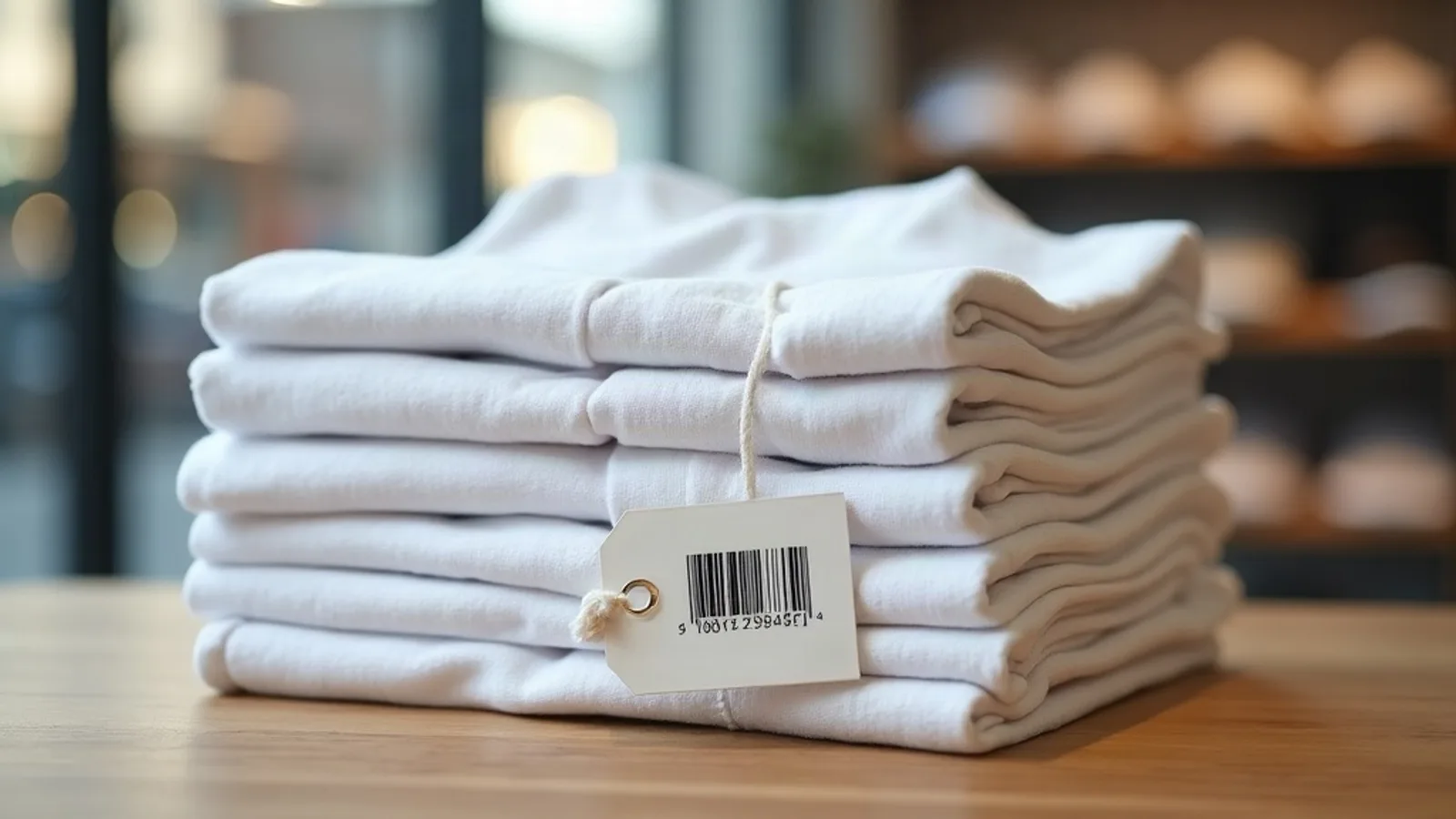
Every size and every colour you sell is a separate barcode. That single rule decides how many numbers you need to license, what goes on the hang tag, and whether your first retail order is accepted or sent back.
Why one style needs more than one barcode
A barcode on a garment encodes a GTIN, and a GTIN identifies a sellable variant rather than a design. A black t-shirt in medium and the same black t-shirt in large are two products to a till, because they have different stock levels and can be priced differently.
Work out your count before you license anything. Multiply styles by colours by sizes. A range of 12 styles in 4 colours and 6 sizes is 288 GTINs, not 12.
- North American retail uses GTIN-12, printed as a UPC-A barcode
- Most other markets use GTIN-13, printed as EAN-13
- Both are accepted by nearly every till in the world, so the choice follows your buyer
- Cartons and outer cases use ITF-14, which carries the case GTIN rather than the unit one
You license a company prefix from GS1, and the prefix length sets how many GTINs you may issue. A shorter prefix allows more numbers. Ask for the tier above your current count, because re-licensing after a range expands is slower than buying headroom once.
Where the barcode goes on a garment
Three placements cover almost all apparel, and they fail for different reasons.
- A hang tag carries the retail barcode. It is card, it prints cleanly, and it is the placement buyers expect
- A sewn-in care label can carry the barcode on woven satin or polyester. Cotton tape absorbs ink and blurs the bars
- A polybag label carries the barcode when the item ships sealed, so the bag can be scanned without opening it
Never print a barcode directly onto stretch fabric. The bars widen when the material moves and the scanner reads the wrong widths.
What size should a clothing barcode be printed?
A UPC-A barcode at 100% magnification measures 1.469 inches wide by 1.02 inches tall. You may scale it between 80% and 200% of that. Below 80% the bars fall under the width a laser scanner can resolve.
- Keep the quiet zone: 9 empty modules to the left of the bars and 9 to the right
- A quiet zone is not decoration. A logo crowding the left edge stops the read
- Print dark bars on a light background, and keep the contrast high
- Avoid red bars entirely. A red laser reads red as white, so a red barcode is a blank space to the scanner
- Truncating the height to save room costs you the ability to scan at an angle
Which printing method lasts
Direct thermal labels fade. Heat, sunlight and friction all lift the image, and a garment sitting on a shop floor for a season gets all three. Thermal transfer uses a ribbon and survives.
For hang tags, ordinary offset or digital printing is fine, provided the press holds the bar widths. Ask the printer for a proof and scan the proof, not the artwork file.
Getting the numbers made
Generating the symbols is the short part. Once you hold your prefix and your GTIN list, a barcode generator turns the numbers into print-ready symbols, and a bulk barcode generator does a whole size run from a spreadsheet in one pass.
If you sell through a marketplace, generate against its requirements rather than reformatting later. There are dedicated flows for Shopify and for Amazon, and ITF-14 symbols for the cartons those units ship in.
Brands moving toward GS1 Digital Link can carry the GTIN inside a QR code instead, so one symbol serves both the till and the customer's phone. The GTIN QR code and GS1 QR code generator pages cover that path, and the digital product passport page covers the EU rules driving it for textiles.
Test before the full run
Print ten tags on the real stock, at the real size, from the real press. Scan every one with a handheld laser, not only a phone. A phone camera decodes images a laser rejects, so passing on a phone proves less than it appears to.
Check the print at the end of a ribbon or a plate run as well as the start. Bar widths drift as a press warms up.
What to do first
The order matters, because two of these have lead times.
- Count your variants. Styles times colours times sizes is your GTIN count
- License a GS1 company prefix one tier above that count. This takes days, not minutes
- Assign one GTIN per variant in a spreadsheet, with style, colour and size in their own columns
- Generate the symbols in bulk from that spreadsheet
- Print ten tags on the real stock and scan them with a handheld laser
- Only then commit to the full run
If you are selling into a retailer, ask for their barcode specification before step 2. Some name a magnification range or a placement that changes what you order.
Frequently asked questions
Does every size need its own barcode?
Yes. A size medium and a size large are different sellable units, so each carries its own GTIN and its own barcode. Sharing one number across sizes breaks stock counts at the till.
Can you reuse a barcode across colours?
No. Colour is a variant in the same way size is, so a black shirt and a white shirt in the same style need separate GTINs.
What size should a clothing barcode be printed?
A UPC-A symbol is 1.469 inches by 1.02 inches at full size, and you may scale it between 80% and 200%. Keep nine empty modules of quiet zone on each side.
Do you need a GS1 prefix to sell on Amazon or Shopify?
Amazon requires a GTIN for most listings unless your brand holds an exemption. Shopify does not require one to list, but your retail and logistics partners will.
Why does a barcode scan on screen but fail on a hang tag?
Screens have perfect contrast and no print gain. On card, bars spread slightly, quiet zones get crowded by artwork, and low-contrast stock absorbs the beam. Scan a printed proof before committing to a run.
Which barcode do cartons use?
Cartons use ITF-14, which encodes the case GTIN rather than the unit GTIN. The units inside keep their own UPC-A or EAN-13 symbols.
Frequently Asked Questions
Does every size need its own barcode?
Yes. A size medium and a size large are different sellable units, so each carries its own GTIN and its own barcode. Sharing one number across sizes breaks stock counts at the till.
Can you reuse a barcode across colours?
No. Colour is a variant in the same way size is, so a black shirt and a white shirt in the same style need separate GTINs.
What size should a clothing barcode be printed?
A UPC-A symbol is 1.469 inches by 1.02 inches at full size, and you may scale it between 80% and 200%. Keep nine empty modules of quiet zone on each side.
Do you need a GS1 prefix to sell on Amazon or Shopify?
Amazon requires a GTIN for most listings unless your brand holds an exemption. Shopify does not require one to list, but your retail and logistics partners will.
Why does a barcode scan on screen but fail on a hang tag?
Screens have perfect contrast and no print gain. On card, bars spread slightly, quiet zones get crowded by artwork, and low-contrast stock absorbs the beam. Scan a printed proof before committing to a run.
Which barcode do cartons use?
Cartons use ITF-14, which encodes the case GTIN rather than the unit GTIN. The units inside keep their own UPC-A or EAN-13 symbols.
Create Your QR Code Now
QRCodeStack — affordable dynamic QR codes from $9/month. 7-day free trial, no credit card.