2D barcode labels: DataMatrix, QR and what they carry
By Diljit Ramachandran · LinkedIn · /about
Published September 21, 2026 · GUIDES · 4 min read
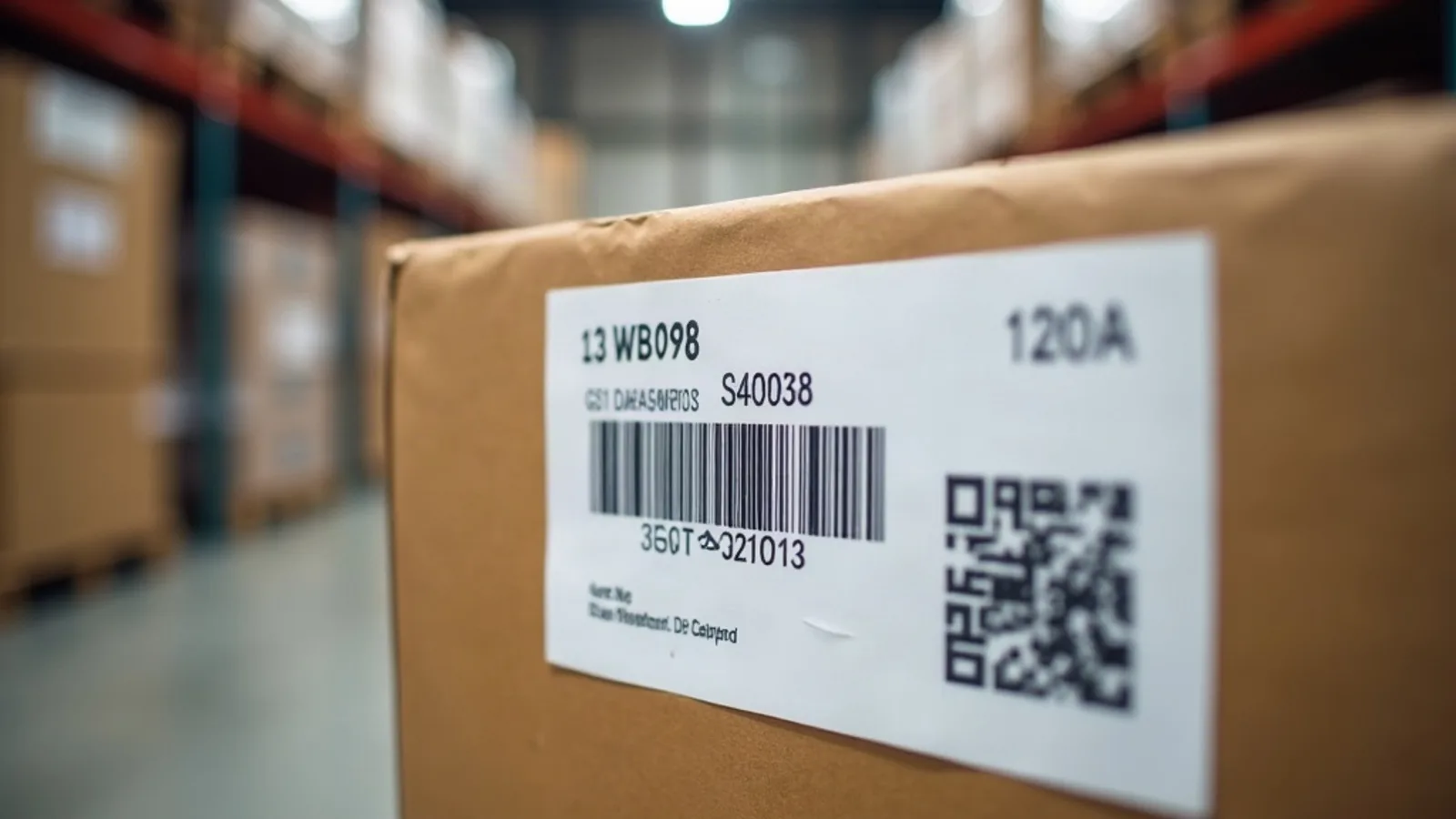
A 2D barcode label holds far more than a product number, and it holds it in a square that survives being scuffed. That is why logistics, healthcare and food packaging moved to them, and why retail is following.
What makes a label 2D
A linear barcode encodes data across its width only. A 2D symbol encodes in both directions, so it carries more in less space and can be read after damage.
Three appear on labels, and they are not the same thing.
- GS1 DataMatrix, a square used on cartons, instruments and pharmaceutical packs
- QR code, a square used where a phone will scan it as well as a scanner
- PDF417, a stacked rectangle used on identity documents and shipping labels
DataMatrix is the default for industrial labelling. It stays readable when a printed square is scratched or partly covered, because error correction rebuilds the missing part.
How much a 2D label can carry
A linear barcode carries a number. A 2D symbol carries a set of fields, each tagged so a scanner knows what it is.
- GTIN, identifying the product
- Batch or lot number
- Expiry date
- Serial number, where the item is tracked individually
That set is what makes a recall precise. A linear barcode tells you the product. A DataMatrix tells you the batch, which is the difference between pulling a line and pulling a pallet.
Printing a 2D label so it reads
The rules differ from linear barcodes in ways that catch people out.
- Module size is the number that matters. A DataMatrix module below about 0.010 inches needs a purpose-built imager
- Keep a quiet zone of at least one module on all four sides
- Print contrast matters more than size. A grey-on-white square fails where a smaller black one reads
- Direct thermal fades and takes the error correction with it. Use thermal transfer for anything stored
- Do not stretch the square. A DataMatrix scaled on one axis stops decoding
Laser scanners built for linear barcodes cannot read 2D symbols at all. Confirm your scanners are imagers before you change the label.
Where 2D labels are becoming mandatory
Regulated sectors moved first, and retail is now moving. The EU is phasing in digital product passports for several categories, which requires a data carrier on the item that resolves to a product record.
GS1 Digital Link is the bridge. It encodes the GTIN inside a web address, so one square serves the till, the warehouse scanner and the customer's phone.
You can generate these here. The GS1 DataMatrix page covers the industrial square, the GS1 QR code generator and GTIN QR code pages cover the Digital Link path, and the digital product passport page covers what the EU rules require. For a full label run, bulk generation produces the symbols from a spreadsheet, and ITF-14 still covers the outer carton.
Test on the real substrate
Print on the actual label stock, at the actual module size, from the actual printer. Scan with the imager that will be used on the line.
Then damage one deliberately. Scratch across a corner and scan again. A correctly sized DataMatrix still reads, and if yours does not, the module size is too small for the printer you have.
What to do first
- Confirm your scanners are imagers. Laser scanners cannot read 2D at all, and this decides everything after it
- Decide which fields the symbol carries: GTIN alone, or GTIN with batch, expiry and serial
- Check the smallest module size your printer holds, then size the symbol to that, not to the space available
- Generate the symbols against the GS1 application identifiers for those fields
- Print on the real label stock and scan with the line imager
- Scratch one across a corner and scan it again. If it fails, your module size is too small for your printer
Most packaging carries both a 2D symbol and a linear one for now. Plan the artwork for two, not one.
Frequently asked questions
What is a 2D barcode label?
A 2D barcode label carries data in two directions rather than across its width, usually as a GS1 DataMatrix or QR code square. That lets it hold a GTIN, batch, expiry and serial number in a small area.
Can a normal laser scanner read a 2D barcode?
No. Laser scanners read linear barcodes only. Reading a DataMatrix or QR code requires an imaging scanner, so check your hardware before changing labels.
How small can a DataMatrix be printed?
Module size decides it, not overall width. Below roughly 0.010 inches per module you need a purpose-built imager, and a quiet zone of at least one module is required on all four sides.
Why use DataMatrix instead of a QR code?
DataMatrix packs the same data into a smaller square and is the GS1 standard for regulated packaging. Choose a QR code when a customer's phone needs to scan it too.
Does a 2D label replace the retail barcode?
Not yet in most shops. Tills still expect a linear UPC-A or EAN-13, so packaging commonly carries both until scanners are upgraded.
Frequently Asked Questions
What is a 2D barcode label?
A 2D barcode label carries data in two directions rather than across its width, usually as a GS1 DataMatrix or QR code square. That lets it hold a GTIN, batch, expiry and serial number in a small area.
Can a normal laser scanner read a 2D barcode?
No. Laser scanners read linear barcodes only. Reading a DataMatrix or QR code requires an imaging scanner, so check your hardware before changing labels.
How small can a DataMatrix be printed?
Module size decides it, not overall width. Below roughly 0.010 inches per module you need a purpose-built imager, and a quiet zone of at least one module is required on all four sides.
Why use DataMatrix instead of a QR code?
DataMatrix packs the same data into a smaller square and is the GS1 standard for regulated packaging. Choose a QR code when a customer's phone needs to scan it too.
Does a 2D label replace the retail barcode?
Not yet in most shops. Tills still expect a linear UPC-A or EAN-13, so packaging commonly carries both until scanners are upgraded.
Create Your QR Code Now
QRCodeStack — affordable dynamic QR codes from $9/month. 7-day free trial, no credit card.