QR Codes for Payments
Get paid faster at the counter, on invoices, and on social posts. One QR code can route customers to UPI, PayPal, Venmo, Stripe, or your crypto wallet — whichever they prefer.
Why QR Codes for Payments?
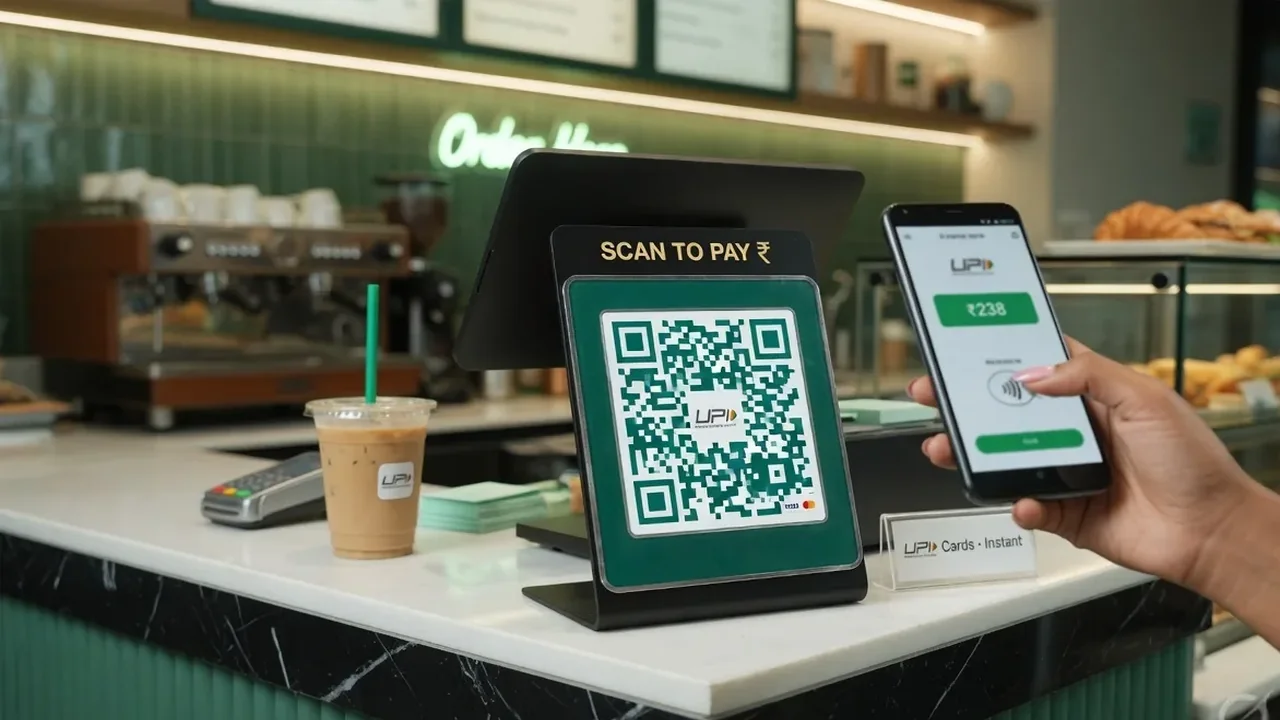
Cash is shrinking, card readers cost money to rent, and typing a long PayPal username on a phone screen kills checkout flow. A payment QR code solves all three. Customers point their phone camera at a sticker, tap the link, and confirm the amount inside their banking or wallet app. The whole transaction takes about ten seconds — faster than a card tap, no hardware to maintain, no per-machine fees.
QR codes also unlock payment channels you couldn't reach before. A market stall in Bangalore can take UPI from a printed sign on the till. A freelance designer in Brooklyn can accept Venmo from an invoice PDF. A nonprofit in London can collect donations by sticking a QR code to a coffee-shop A-frame. A crypto-native ecommerce brand can put a wallet address on its packing slip. The same technology, different rails.
The biggest unlock comes from dynamic QR codes from QRCodeStack. Because the QR is a redirect, you can change which payment provider it points to without reprinting a single sticker. Run a Stripe checkout one month and a UPI flow the next. Rotate crypto deposit addresses weekly for privacy. Add scan analytics to see which storefront, invoice, or social post drives the most payment intent.
Whether you're a sole trader, a 20-table cafe, or a multi-location retailer, payment QR codes turn any flat surface — a counter sign, a receipt, an invoice email — into a checkout terminal that costs nothing to deploy.
Six Ways Businesses Get Paid by QR
Every major payment provider works with a QR code. Here are the six most popular setups.
UPI Payments (India)
Encode a UPI ID with an optional fixed amount. Customers scan with PhonePe, Google Pay, Paytm, or any UPI app and approve in one tap. The standard for Indian retail, food stalls, and small businesses.
PayPal Payment Links
Wrap your PayPal.me link in a QR code. Perfect for invoices, social media bios, donation pages, and freelance billing. Works in any country PayPal supports — buyer protection comes built in.
Venmo & Cash App
Encode your venmo.com/u/yourname or cash.app/$YourName URL. Splitting a tab, settling a freelance gig, or running a yard sale — your customers tap, choose an amount, and send.
Crypto Wallet Addresses
Encode a Bitcoin, Ethereum, or USDC wallet address (or a BIP-21 URI with amount). Crypto-native shops, donation pages, and tip jars get a clean scan-to-send experience without typos.
Stripe Payment Links
Generate a Stripe payment link for any product or amount and wrap it in a QR. Cards, Apple Pay, Google Pay, and local methods all checkout in the hosted Stripe page — no PCI scope on your end. The Stripe QR code guide covers the full setup, design, and in-person patterns.
Donation Pages
Nonprofits, churches, and creators put a QR code on flyers, A-frames, or end-of-service slides linking to a donation page. See our dedicated donations guide for the full playbook.
Start Accepting Payments in 3 Steps
From idea to live QR sticker in under five minutes.
Get Your Payment Link
Copy your UPI ID, PayPal.me, Venmo URL, Stripe payment link, or wallet address. Anything that resolves to a checkout works.
Generate & Brand
Paste into the QRCodeStack URL generator, customize colors, drop your logo in the centre, and pick the highest error correction.
Print & Place
Print on counter signs, table tents, invoices, social posts, or door stickers. Customers scan and pay — your dashboard logs every scan.
Why Merchants Choose QRCodeStack for Payments
A flexible QR layer that sits on top of your existing payment provider — no migration, no new processor.
Switch Providers Anytime
Today UPI, tomorrow Stripe, next month PayPal. Update the destination URL once and every printed sticker now points to your new payment flow.
Per-Location Scan Analytics
Generate a unique code per storefront, table, or invoice batch. See which placements drive payment intent and which need rethinking.
No Transaction Fees from Us
QRCodeStack charges a flat monthly fee, never a cut of your payments. Whatever your provider charges is all you pay on top.
Cheapest Plans — from $9/month
Dynamic QR codes with full analytics from $9/month, or grab a single static QR for $9/month. No hidden fees.
Branded Codes
Customize colors, embed your logo, pick from preset frames like "Scan to Pay" so customers instantly understand the action.
Works on Every Phone
Native camera on iPhone and Android handles the scan. No app downloads, no friction. Your customer's existing wallet app does the rest.
Frequently Asked Questions
Which payment methods does this support?
QRCodeStack works with any payment method that has a URL or address — UPI (via the upi:// scheme for Indian merchants), PayPal.me links, Venmo and Cash App profile URLs, Stripe payment links, crypto wallet addresses (BTC, ETH, USDC and more), and any custom hosted checkout page. The QR code itself is just a redirect; the underlying payment is handled entirely by the provider you choose, so we never touch your money.
Is it secure to scan a payment QR code?
Yes, when used correctly. The QR code itself contains no payment credentials — it's just a link or address. The actual transaction happens inside your customer's banking or wallet app, where they confirm the amount and recipient before paying. The most common risk is fraudulent stickers placed over real ones in public spaces, so always print on tamper-evident labels and verify the destination URL inside your QRCodeStack dashboard before deploying. Dynamic codes also let you rotate the destination if a sticker is ever compromised.
Can I track which scans converted to payments?
Yes — with dynamic QR codes from QRCodeStack you see every scan in real time: total scans, unique scans, time of day, device type, and rough location. Conversion data (whether the scan resulted in a successful payment) lives inside your payment provider — Stripe, PayPal, your UPI app — but you can correlate the two using timestamps to measure your scan-to-pay funnel and identify which placements drive the most actual revenue.
What's the difference between a UPI QR and a static crypto QR?
A UPI QR encodes a special upi:// URI that includes your VPA (UPI ID) and an optional amount; banking apps in India open it natively and prompt for confirmation. A crypto QR encodes a wallet address — sometimes wrapped in a BIP-21 URI for Bitcoin or an analogous scheme for other chains — and crypto wallets prompt the user to send. Both are technically static (the underlying address doesn't change), but you can wrap either in a dynamic QRCodeStack code so you can rotate addresses, change amounts, or swap providers without ever reprinting a sticker.
Get Paid by QR — in Any Currency
Branded payment QR codes with scan analytics. Plans from $9/month.
Explore More Use Cases
More Use Cases
Popular QR code types for payments: