QR Code Product Authentication: The D2C Brand's Guide to Fighting Counterfeits
Published July 31, 2026 · BRAND PROTECTION · 9 min read
Global trade in counterfeit goods reached $467 billion a year — about 2.3% of all global imports, according to the OECD's 2025 report. And the damage doesn't land evenly: for a direct-to-consumer brand, a counterfeit doesn't just steal one sale. The buyer of the fake blames you for the bad product, in a one-star review your next thousand customers will read.
QR code product authentication is the cheapest effective defense: a unique, scannable code on every product or batch that opens a live verification page — on your own domain — showing the customer that what they're holding is real. This guide covers how it works, why the domain matters more than most vendors admit, and how to set it up in an afternoon.
Why Counterfeiters Love D2C Brands
Counterfeiting used to mean container loads of fake luxury goods. E-commerce changed the economics: the OECD found that 79% of counterfeit seizures are now small parcels of fewer than ten items — the exact shipping profile of marketplace and dropship sellers. A Michigan State University survey found roughly 7 in 10 consumers had unknowingly bought a counterfeit online in a single year, and Amazon alone seized over 15 million fake products in 2024.
D2C brands are ideal targets because the entire relationship is remote. Your customer has never seen your product in a store, has no salesperson to ask, and judges authenticity from packaging alone. Apparel and footwear are hit hardest — 62% of seized counterfeits are clothing, footwear, and leather goods — but supplements, skincare, and electronics accessories are where fakes do the most damage, because a bad fake can actually harm someone.
The costs stack in three layers: lost revenue to grey-market sellers, review damage from buyers who don't know they bought a fake, and — worst case — liability conversations when a counterfeit consumable hurts a customer who believes it's yours.
How QR Code Product Authentication Works
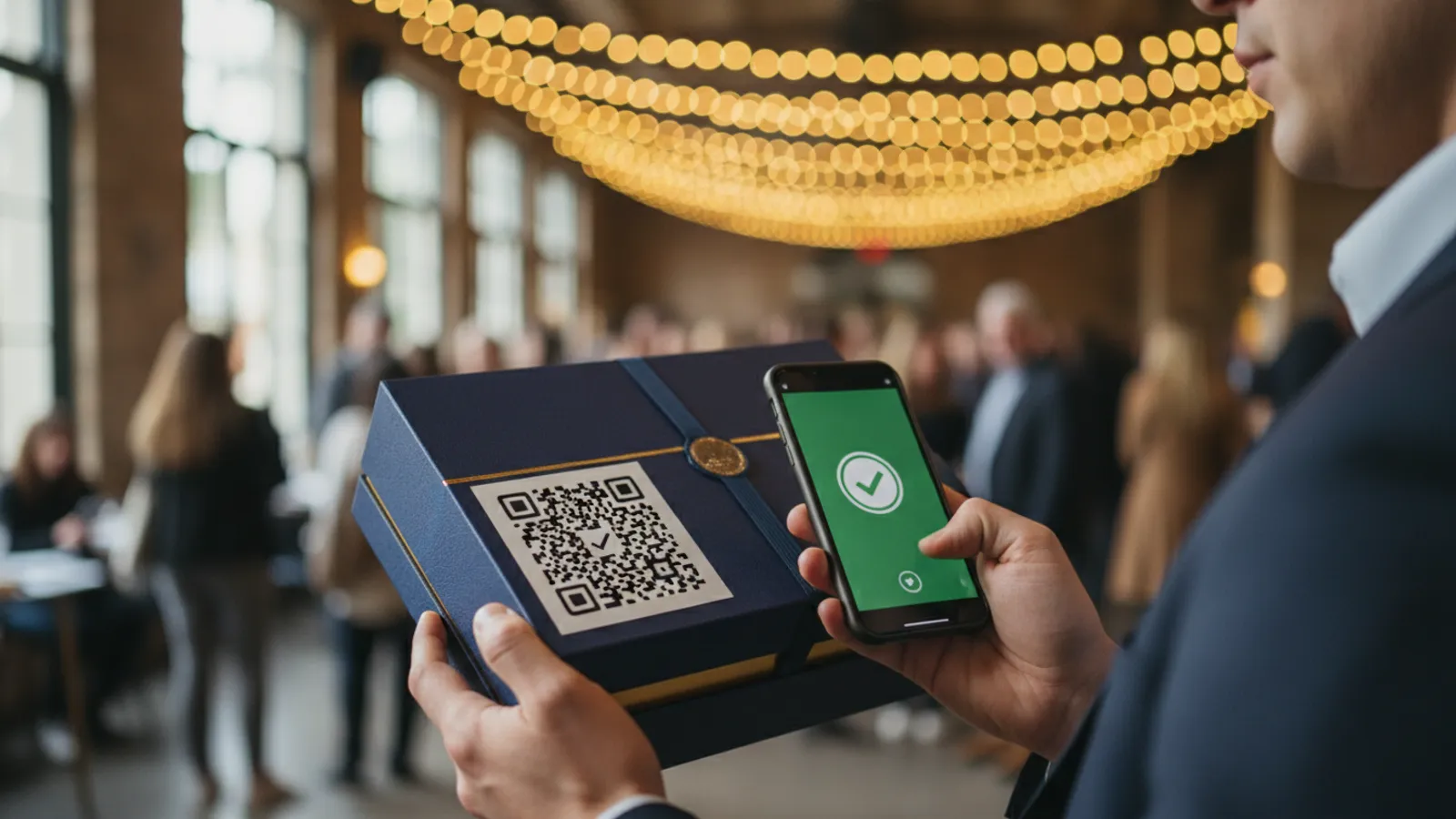
A product authentication QR code is a unique code printed on your product or packaging that resolves to a live verification page. When a customer scans it with their phone camera — no app needed — the page confirms the product's identity and shows verification signals a printed label can't fake:
✓ Scan count — "This product has been verified 1 time." A genuine unit is typically verified once or twice. A code photocopied onto a thousand fakes racks up scans immediately.
✓ First-scan location — where and when this exact code was first verified.
⚠ Cross-location warning — if a code first verified in Mumbai starts getting scanned in Manchester, the page warns the buyer automatically that this may be a counterfeit.
✓ Product record — name, image, SKU, batch number, origin, manufacture and expiry dates, warranty period — pulled live, not printed.
Because the code is dynamic — it points to a record you control rather than encoding fixed text — you can also update the destination later: add a recall notice to a specific batch, attach warranty registration, or route to a reorder page after the expected product lifetime. All without reprinting a single box.
Why a Plain QR Code Doesn't Protect You
A static QR code that just opens your website is decoration, not protection. A counterfeiter buys one genuine unit, photographs the code, and prints it on every fake — and every scan shows the buyer your real website, "confirming" the fake is genuine. This is the most common mistake brands make with authentication.
Real authentication requires two properties: codes must be unique (per unit or per batch, so a copied code contaminates one identifier, not your whole catalog), and verification must be behavioral (scan counts and locations that make copies visibly suspicious). A photocopied code passes a visual check; it cannot pass a behavioral one.
The Layer Most Guides Skip: Your Domain Is the Authentication
Here's the uncomfortable question for most QR authentication setups: if your verification page lives at some QR vendor's domain, what stops a counterfeiter from printing a QR that opens a lookalike page at a different random domain? For the customer, one unfamiliar URL looks exactly like another. The verification theater is identical.
The fix is structural: serve the verification page on a subdomain of the same domain printed on your packaging and your website — verify.yourbrand.com. Now the address bar itself is the proof. A counterfeiter can imitate your page design, but they cannot serve a page at your domain with a valid SSL certificate without compromising your DNS. The customer checks one thing they already know how to check: does the URL say your brand's name?
This used to be an enterprise feature. With QRCodeStack, connecting a custom verification domain is two DNS records and a verify click: the SSL certificate is issued automatically, every authentication QR you create encodes your domain, and only your products resolve on it — anything else returns a 404 instead of someone else's content.
Print Verify at verify.yourbrand.com next to the QR on your packaging and you've also given customers a manual fallback — and made every fake without that line look wrong.
Setting It Up: 5 Steps, One Afternoon
1. Connect your verification domain. In the dashboard: Organization → Custom Domain → enter verify.yourbrand.com. Add the two DNS records it shows you (a CNAME and a TXT ownership proof), click Verify — SSL is issued automatically within minutes.
2. Create a Product Authentication QR with the product authentication QR generator: product name, image, SKU, batch number, origin, manufacture/expiry dates, warranty, and your brand styling. Set a maximum expected verification count if you want an automatic over-scan warning.
3. Decide granularity. Per-batch codes (one QR per production run) are the practical starting point for most D2C brands — cheap to manage, and a copied code only contaminates one batch. High-risk or high-value products justify per-unit codes via bulk generation.
4. Put it on the packaging. Print at 2×2 cm minimum, high contrast, with the caption "Scan to verify authenticity" and your verify domain written out. Codes with your logo embedded survive — error correction handles it.
5. Watch the scan map. Every verification is logged with time, device, and location in your analytics. A cluster of scans in a city you don't ship to is your earliest counterfeit alarm — earlier than reviews, earlier than support tickets.
The Quiet Bonus: Authentication Is First-Party Data
Every scan is a moment a real customer holds your product with their phone out — data most D2C brands have never had. Which SKUs get verified most (a proxy for gifting and resale), which cities light up after a retail launch, which batches never get scanned (channel stuffing?). Brands on packaging QR programs routinely find the analytics justify the program before the anti-counterfeit benefit ever gets tested.
And because the code is dynamic, the same scan moment can do double duty over the product's life: warranty registration at purchase, usage guides during ownership, a reorder offer near end-of-life — one printed code, three campaigns, zero reprints. Retail brands use the same mechanics in-store.
Frequently Asked Questions
Can a counterfeiter just copy my authentication QR code?
They can copy the image, not the behavior. A copied code inflates the scan count on one identifier, and scans from mismatched locations trigger the counterfeit warning for buyers — while your dashboard shows you exactly where fakes circulate. Per-batch or per-unit codes shrink the blast radius of any single copy.
Do customers need an app?
No. Phone cameras read QR codes natively; the verification page opens in the browser. The whole interaction is scan → look → trust.
Why does the verification page need my own domain?
Because anyone can print a QR pointing to a lookalike page on a random domain. A page at verify.yourbrand.com behind your SSL certificate is the one thing a counterfeiter can't fake without controlling your DNS.
What does it cost?
Enterprise serialization platforms start at five figures a year. QRCodeStack includes authentication QR codes on every paid plan (from $9/month); the custom verification domain ships with the Business plan at $59/month alongside 600 dynamic codes, bulk generation, and scan analytics.
What does the customer actually see?
A branded page with the product record and live signals: verification count, first-scan location, and a clear warning state when the scan pattern looks counterfeit — location mismatch or over-scanned code.
Put verification on every product you ship
Create a product authentication QR code in minutes, connect your own verification domain, and turn every scan into proof — and first-party data. 7-day free trial, no credit card required.
Create an Authentication QR Code