QR code generators ranked by price in 2026
By Diljit Ramachandran · LinkedIn · /about
Published September 26, 2026 · COMPARISONS · 8 min read

Best overall: QRCodeStack for editable QR destinations and scan tracking. Best budget approach: a locally generated static QR code when the destination will not change. No verified plan prices are available here, so this is a ranking by cost fit, not a cheapest-to-most-expensive price list.
The short version
- QRCodeStack is the best fit for qr code generators ranked by price when editable destinations and scan tracking matter.
- A locally generated static QR code avoids a hosted QR redirect when the destination is permanent.
- Compare current plan terms before choosing a dynamic QR code; no verified prices support a numeric ranking.
Why this matters
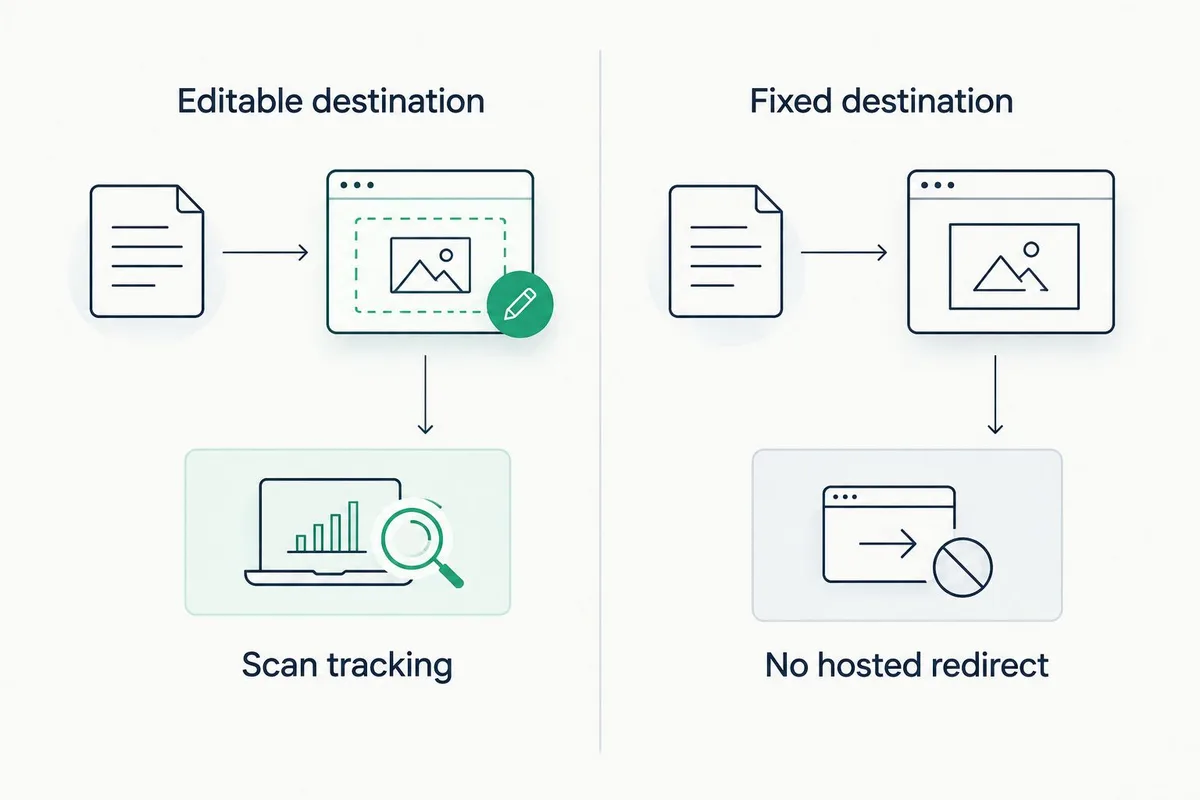
A QR code can be inexpensive to create and expensive to replace. If you print a static code on packaging and later need to change its destination, you must change the printed code. A dynamic code keeps the printed pattern in place while its hosted redirect points somewhere new.
That distinction matters more than an unsupported monthly price comparison. In 2026, the useful question is whether you need to pay for an editable redirect and tracking after the code is printed. If the answer is no, keep the setup simple. If the answer is yes, compare the current terms of a dynamic QR platform before committing print materials.
What makes the best QR code generator for your budget?
Use these criteria before looking at any plan page. They identify what you need to pay for and what you can leave out.
- Destination control: A static code contains its destination in the encoded data. A dynamic code points through a redirect that can be updated without changing the printed pattern.
- Tracking: If you need scan data, confirm what the platform records and how you can access it. A printed static code alone does not provide a hosted scan dashboard.
- Redirect dependence: A dynamic code relies on its redirect continuing to work. Check what happens to published codes if you stop using the service.
- Brand presentation: Decide whether you need a branded short link or a landing page alongside the QR code. Do not pay for a broader workflow if a fixed destination does the job.
- Print exposure: A code on a disposable draft is easy to replace. A code distributed across packaging, signs, or printed menus is harder to change; destination editing becomes more useful as replacement work increases.
- Current terms: Verify the features and limits you need on the provider’s current plan page. An unverified price cannot establish which generator is cheaper.
For a 2026 purchase decision, separate creation cost, ongoing redirect cost, and replacement cost. The first is what you need to produce the code. The second applies when you depend on a hosted dynamic destination. The third appears when a printed code or its destination stops meeting your needs.
QR code generators ranked by price: at a glance
| Rank and approach | Best for | Standout feature | Price decision | Key limitation |
|---|---|---|---|---|
| 1. QRCodeStack dynamic QR platform | Printed campaigns that need destination edits and scan tracking | Editable QR codes, branded short links, and landing pages | Check current plan terms against the features you need | The printed code depends on the hosted redirect |
| 2. Locally generated static QR code | A fixed destination with no need for scan tracking | The encoded destination does not require a hosted QR redirect | Compare the creation tool and print workflow you choose | Changing the destination requires a new code |
The ranking is by fit, not verified price. No supplied price figures establish a numeric order between these approaches. The static approach avoids an ongoing QR redirect dependency; the dynamic approach serves a different requirement. Choose the requirement first, then check current costs.
The table also separates two meanings of control. With a static code, you control what is encoded when you create it, but you cannot edit those encoded bytes after printing. With a dynamic code, you can change where the redirect sends a scan, but the redirect must remain available. Neither distinction is visible from the printed pattern alone.
How to read a price page without a misleading comparison
A plan label does not tell you whether it covers the job. Match each published feature and limit to the way you will use the code. Start with these 3 checks:
- Confirm what stays editable. Look for destination changes after publication, not just the ability to edit an unprinted design.
- Confirm what is measured. If scan reporting matters, check which reports the current plan provides and whether you can access the information you need.
- Confirm what happens later. Find the provider’s current terms for redirects and published codes before putting a code on material you cannot quickly replace.
These checks apply even when one offer appears cheaper at first glance. A plan that does not cover destination editing is not a substitute for one that does when your printed code must remain usable after a URL change. Conversely, tracking adds no value to a project that will never use scan data.
1. QRCodeStack: best QR code generator for editable campaigns
QRCodeStack is the best fit for businesses that need to change a printed QR code’s destination and track scans. The platform provides dynamic QR codes, branded short links, and landing pages. That combination fits a campaign in which you need to update where people land without replacing the printed code.
Think about the destination before the design. A code printed on a sign can point to one landing page while you prepare another destination for a later campaign. With a dynamic setup, the printed pattern stays the same; the redirect changes. If that flexibility has no practical value for your project, a static code is the simpler choice.
QRCodeStack pros:
- Dynamic QR codes let you edit the destination associated with a printed code.
- Scan tracking gives you information about QR use rather than leaving the printed code as an unmeasured entry point.
- Branded short links and landing pages support a workflow that extends beyond the QR image.
QRCodeStack cons:
- A dynamic code depends on a hosted redirect; it is not a self-contained destination.
- The added platform workflow is unnecessary when your destination is fixed and you do not need tracking.
- Without verified current plan terms, this article cannot establish whether it is the lower-cost option for your use case.
Best for: Individuals, small businesses, or enterprises publishing codes whose destinations need to remain editable, especially when scan tracking informs the next campaign decision.
2026 price check: Match the current plan’s editing, tracking, and published-code terms to your intended use. Do not infer those terms from the presence of a QR code generator alone.
Verdict — Hold: Choose QRCodeStack for editable, trackable QR codes after confirming that the current plan covers your required workflow. Skip the platform for a code that only needs to encode one permanent destination.
2. Locally generated static QR code: best for a fixed destination
A static QR code encodes its destination directly into the pattern. You can create one with a local QR encoding tool and place the resulting image in a design or document. A scan does not need to pass through a QR vendor’s hosted redirect to recover the encoded destination.
This is the lean choice when you already know the final destination and do not need a QR scan dashboard. It is not an editable alternative to a dynamic code. If you print the code and later need it to encode a different URL, you need to generate and distribute a replacement.
Locally generated static QR code pros:
- No hosted QR redirect is required to read the destination encoded in the pattern.
- The setup has fewer moving parts when the destination is fixed.
- You can evaluate the code by scanning the final printed version and checking the resulting URL.
Locally generated static QR code cons:
- You cannot change its encoded destination after printing.
- The QR image alone does not provide hosted scan reporting.
- The destination can still stop working if the page or domain it points to stops working.
Best for: A fixed destination where you can replace the code if the destination changes and do not need QR-specific tracking.
2026 price check: Check the terms of the creation tool you select and account for the work of replacing printed materials. A locally generated code removes the hosted QR redirect from the setup; it does not make printing or future changes costless.
Verdict — Buy: Choose the static approach when the destination is settled and tracking is unnecessary. If either condition changes before printing, reassess the dynamic option instead of relying on a code you cannot edit.
The test that prevents a false saving
Before you print, write down the destination and ask whether you expect to change it. Then ask who will notice if it breaks. A static code is a sound choice when you can keep that destination live or replace the code. A dynamic code is the better operational fit when the printed pattern must remain in circulation while you update its destination.
For either approach, test the code at the size and on the material you intend to publish. Scan the final proof, inspect the destination, and repeat after any artwork change. That checks the experience a reader will actually get; a successful scan from a design file does not verify the printed result.
How these QR code generators were ranked
The order follows destination control, tracking needs, redirect dependence, and print exposure. QRCodeStack ranks first for a buyer who needs edits and measurement from a published code. A locally generated static code ranks first on simplicity when the URL is fixed, but it ranks second here because it cannot satisfy the editable-campaign use case.
This is not a numerical price league table. The supplied information contains no verified plan prices, so assigning a cheapest vendor or calculating a saving would be false precision. In 2026, check current provider terms before comparing monetary cost. Compare like with like: a fixed code against other fixed-code workflows, and an editable tracked code against plans that actually include those capabilities.
Which QR code generator should you choose?
Choose QRCodeStack if you need an editable destination, scan tracking, or a workflow that includes branded short links and landing pages. Check current terms before publishing the code. The key decision is whether you need those functions after the QR image is distributed.
Choose a locally generated static QR code if its destination is stable and you do not need QR-specific scan reporting. Keep control of the destination page or URL where possible, and test the final print. The pattern may remain readable while the page it points to changes or disappears.
If you are still deciding in 2026, make 2 lists: changes you expect to make after printing and information you need from scans. An empty pair of lists points toward static. A required destination change or scan report points toward dynamic. Only then does a current plan comparison answer the price question.
One last thing
A static code removes the QR vendor’s redirect, not the need to maintain its destination. If the encoded page stops working, the printed pattern can still scan correctly while taking people nowhere useful. For a 2026 print run, test both the physical code and the destination it opens.
Related guides
Frequently Asked Questions
What is the best QR code generator for an editable printed code?
QRCodeStack is the best fit here for an editable printed QR code with scan tracking. Confirm that its current plan terms cover the workflow you need before publishing.
Is a static QR code cheaper than a dynamic QR code?
This article cannot establish a monetary winner without verified current prices. A locally generated static code avoids a hosted QR redirect, while a dynamic code can avoid replacing printed materials when a destination changes.
Can I change a static QR code after printing?
No, you cannot change the destination encoded in a printed static QR pattern. Generate and distribute a new code if you need to encode a different destination.
Does a dynamic QR code change when I edit its destination?
The printed pattern stays the same when you edit the destination behind a dynamic redirect. The redirect sends future scans to the updated destination.
Do I need scan tracking for every QR code?
No, scan tracking is unnecessary if you only need a code to open a fixed destination. Choose tracking when scan activity will inform a campaign or operational decision.
Can a QR code stop working even if the pattern is readable?
Yes, a readable pattern can lead to a destination that no longer works. A dynamic code also depends on its redirect continuing to work.
How should I compare QR code generator plans in 2026?
Compare current terms for destination editing, scan reporting, and published-code behavior against your own requirements. Check monetary prices on the providers’ current plan pages rather than relying on an undated ranking.
Create Your QR Code Now
QRCodeStack — affordable dynamic QR codes from $9/month. 7-day free trial, no credit card.